

8 Quran Verses About Patience: Meaning and Daily Practice
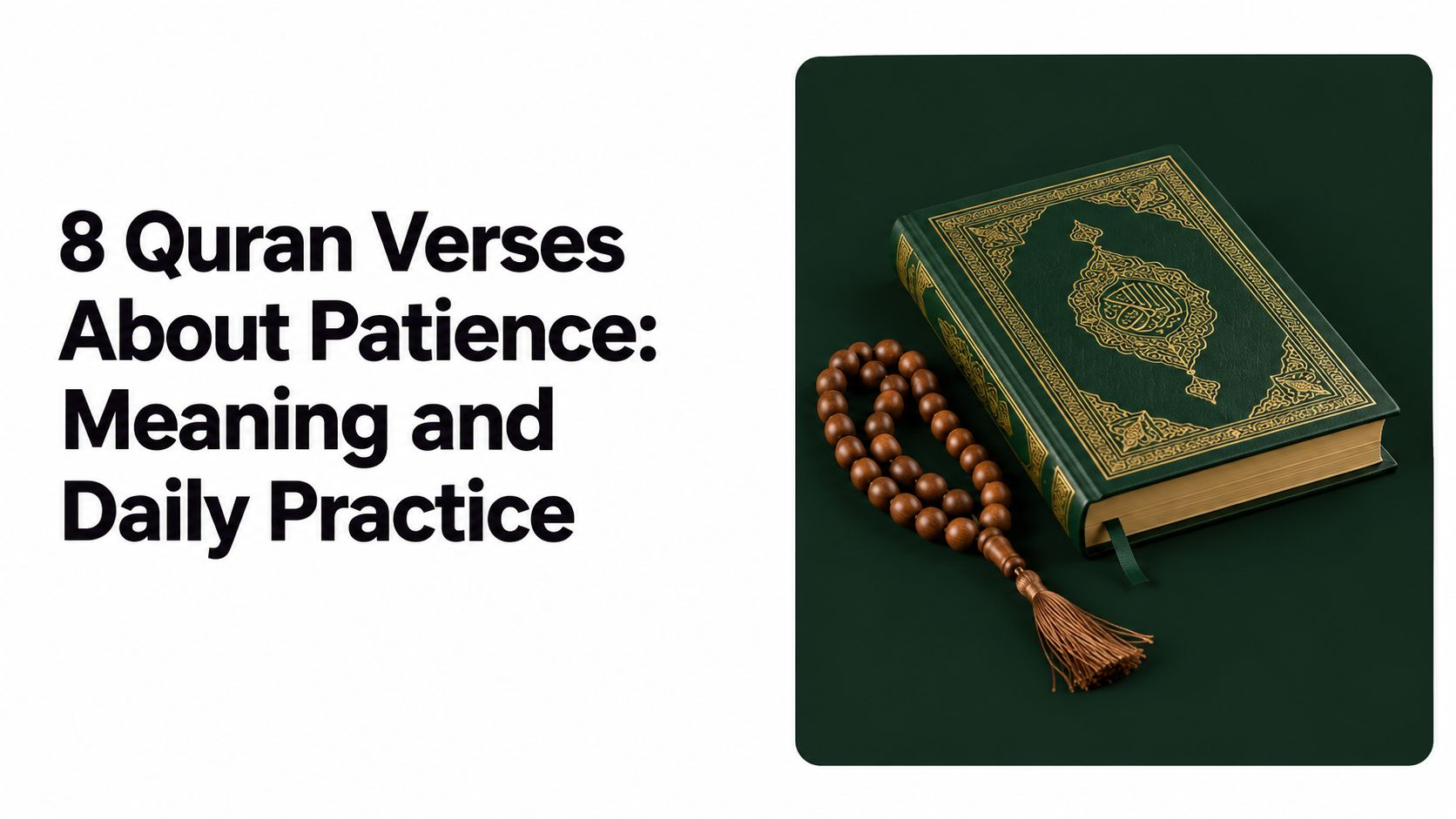
You refresh the exam results page, but nothing has changed. Or you open another rejection email after weeks of applications. Perhaps the difficulty is quieter: someone you love has died, and ordinary tasks now take more effort than you expected.
In moments like these, being told to be patient can feel incomplete. Patient with what? For how long? And what are you supposed to do while you’re waiting, grieving, or trying again?
The Quran addresses patience in different settings. Some passages speak directly about loss. Others connect steadiness with prayer, community, hope, or continued good action. These Quran verses about patience are paired with the hardships they can help you reflect on, so you can begin with the situation closest to yours.
The Arabic word sabr means more than waiting. It includes restraint, endurance, and remaining steadfast in doing what’s right. You can feel frightened or heartbroken while practicing it. You can also seek treatment, ask for help, or leave an unsafe situation.
Each entry offers a plain-language meaning, an everyday example, and a practice you can try. The explanations are reflections, not full tafsir, the detailed interpretation of the Quran. Some selections directly command patience; others offer reassurance that supports it.
You don’t need to read everything at once. Start with the hardship you can name today.
Table of Contents
- 1. Quran 2:153 Seek Help Through Patience and Prayer
- 2. Quran 2:155–157 Good News for the Patient Who Says “Indeed We Belong to Allah”
- 3. Quran 3:200 Be Patient, Endure, Remain Stationed, and Fear Allah
- 4. Quran 94:5–6 With Hardship Comes Ease
- 5. Quran 13:28 Hearts Find Rest in the Remembrance of Allah
- 6. Quran 16:127 Patience Comes Only from Allah, and Do Not Grieve Over Them
- 7. Quran 39:10 The Patient Receive Their Reward Without Account
- 8. Quran 11:115 God Does Not Waste the Reward of Good-Doers
- How the eight patience verses differ by hardship, response, and best use
- Choosing One Verse to Carry This Week
1. Quran 2:153 Seek Help Through Patience and Prayer
For when you feel overwhelmed before something you can’t control.
A medical appointment is approaching. You’ve prepared your questions, but your thoughts keep returning to the worst possible outcome. This verse gives you something to do with that uncertainty.
Its central instruction is to seek Allah’s help through patience and prayer. It closes by affirming that Allah is with those who are patient. The reassurance isn’t that a difficult appointment, interview, or exam will necessarily end as you wish. It’s that you aren’t abandoned while facing it.

Patience and prayer belong together here. You continue taking responsible steps while turning to Allah for help with what you cannot settle yourself. A thematic study of Quranic patience describes this connection as inner endurance joined with worship, rather than passive waiting.
That distinction matters when anxiety tempts you to stop preparing. Prayer doesn’t replace revising for an exam or attending an appointment. You can pray, prepare, and acknowledge that the outcome remains outside your control.
Turn worry into a steady response
Choose a familiar point in your day, perhaps after an obligatory prayer, to revisit the verse. Ask Allah for steadiness, then name the next useful action available to you.
- Before an appointment: Write down the concern you most need to discuss.
- Before an interview: Prepare your examples, then stop rehearsing when you need rest.
- Before an exam: Review the material without treating the result as a measure of your worth.
Reflect: Where do I need help remaining steady, rather than help controlling everything?
2. Quran 2:155–157 Good News for the Patient Who Says “Indeed We Belong to Allah”
For bereavement, financial loss, and the shock of unwanted change.
These passages name hardship plainly: fear, hunger, and losses involving possessions, lives, and crops. They don’t ask the reader to pretend that suffering is small. They describe people who respond to calamity by acknowledging that they belong to Allah and will return to Him.
The phrase inna lillahi wa inna ilayhi raji’un expresses that belonging and return. Saying it is called istirja‘. It gives you words when your own words are difficult to find.
Grief and patience can exist together. Crying, missing someone, and needing support don’t automatically mean you’ve failed to be patient.
The passages go on to describe blessings, mercy, and guidance for those who endure. Their reassurance concerns the person carrying the loss, not a demand that the person stop feeling it.
Say a family member has died. You may repeat the phrase while also feeling numb, angry, exhausted, or unable to concentrate. Your next faithful action might be accepting a meal, asking someone to handle paperwork, or resting before another difficult conversation.
Give the loss an honest name
Read the passage slowly, then write a private sentence about what has changed. Be specific: you miss a familiar voice, fear paying the rent, or feel frightened by a change in your health.
For related passages, our collection of Quran verses about grief offers further reading without requiring you to rush past sadness.
You can also pause for a listening break before returning to your reflection.
Reflect: What support would help me carry this loss today, without pretending it doesn’t hurt?
3. Quran 3:200 Be Patient, Endure, Remain Stationed, and Fear Allah
For long commitments and difficulties you shouldn’t have to carry alone.
Some hardships aren’t sudden. They involve maintaining a household through illness, studying while working, or rebuilding religious practice when enthusiasm has faded. You need endurance that lasts beyond a motivated morning.
This verse joins patience with perseverance, steadfast readiness, and mindfulness of Allah. Its language addresses believers together, so the emphasis isn’t only on private strength. It also concerns how people remain committed alongside one another.
A linguistic and thematic analysis of sabr explains that the term encompasses restraint, endurance, steadfastness, and perseverance, and connects this passage with mutual reinforcement. That range helps explain why translating every situation as mere waiting would miss so much.
Keep your commitment without isolating yourself
The command often rendered as remaining stationed carries a sense of readiness and steadfast commitment. The call to taqwa, meaning awareness of Allah that guides conduct, keeps that determination connected to moral responsibility.
For example, you’re helping care for an unwell parent. Remaining steadfast doesn’t mean refusing assistance until you collapse. It may mean arranging shared responsibilities so the care can continue.
- Keep a practice: Protect a manageable time for prayer or Quran reading.
- Accept reinforcement: Ask someone trustworthy to check in when you’re struggling.
- Protect your conduct: Don’t let exhaustion become permission to mistreat others.
For a related reminder when discouragement takes over, read Do Not Lose Heart.
Patience here isn’t stubbornly repeating an unsustainable routine. You can change the arrangement while preserving the commitment that matters.
Reflect: What am I trying to sustain, and who could help me sustain it responsibly?
4. Quran 94:5–6 With Hardship Comes Ease
For the season when difficulty seems to fill your whole life.
When a problem lasts, you can begin to describe everything through it. You’re no longer someone looking for work; you feel like someone whose life has stopped. You’re no longer recovering from an illness; you feel reduced to the illness itself.
These passages repeat the assurance that ease accompanies hardship. The repetition gives you a reason to return to hope when your circumstances haven’t yet changed.
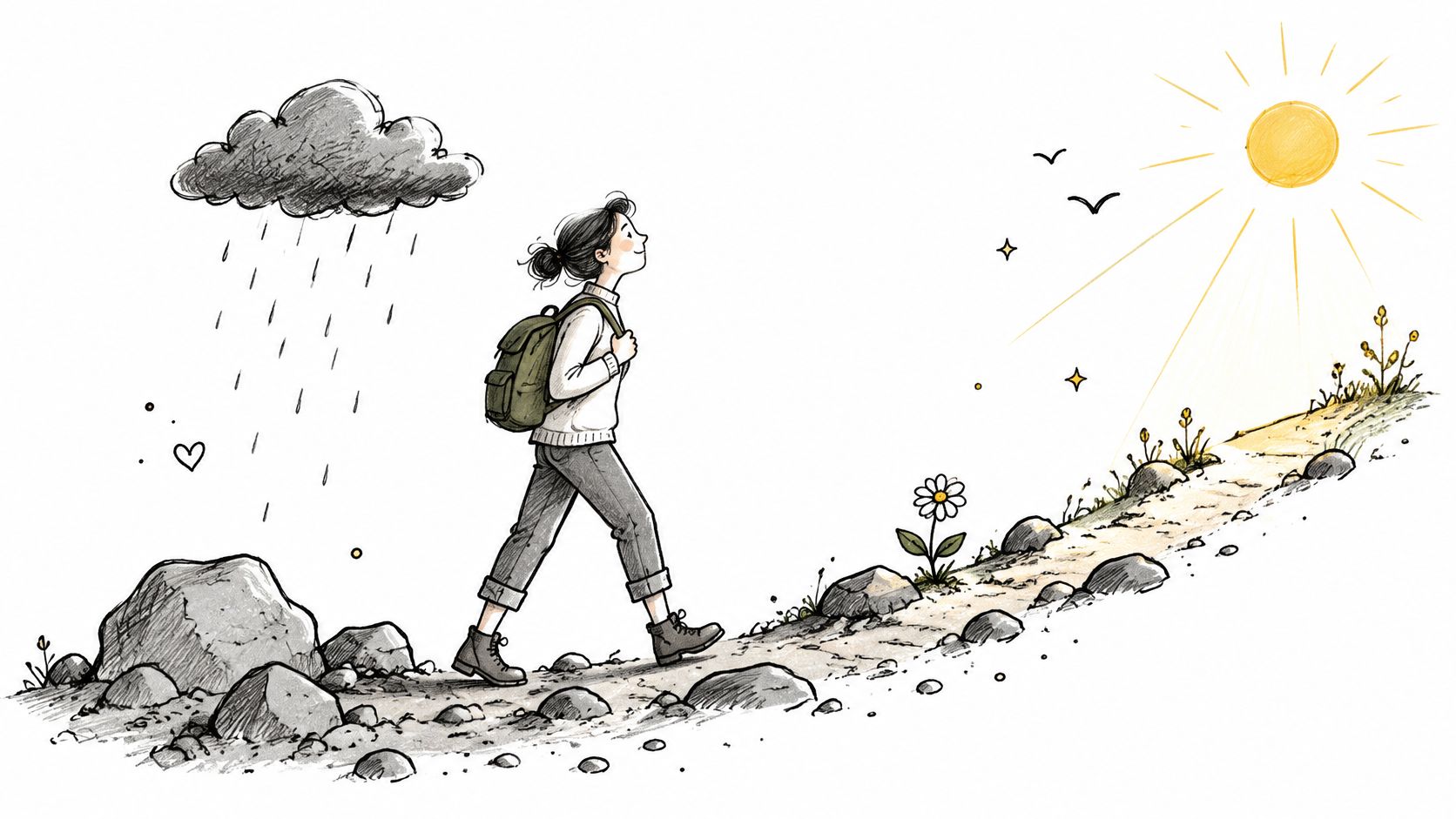
The Arabic word ma’a means with. Notice the difference between looking only for a future ending and also noticing the support available during the struggle. That doesn’t mean every hardship feels manageable, or that you must find an immediate benefit in something painful.
It also doesn’t give you a timetable. You can hope for relief without promising yourself that a job offer, recovery, or reconciliation must arrive by a particular day.
Notice help without denying pain
Suppose you’re unemployed and worried about money. An interview invitation doesn’t solve the problem, but it is an opening. A friend helping with your application is real assistance, even while the uncertainty remains.
Looking for ease isn’t the same as calling the hardship easy.
Read the passage, then name something that makes today more bearable. It might be practical help, a place to rest, a clearer decision, or the ability to ask for support.
If you can’t identify anything yet, don’t turn the exercise into another test you’ve failed. You can begin by asking Allah for relief and telling someone trustworthy that you’re struggling.
Reflect: What help can I receive today, even before the larger problem is resolved?
5. Quran 13:28 Hearts Find Rest in the Remembrance of Allah
For anxious thoughts, restlessness, and the urge to keep checking.
You’ve checked the message thread again. There’s no reply, but your mind is already inventing explanations. You want certainty, and your phone can’t give it to you.
This verse connects reassurance of the heart with dhikr, meaning remembrance of Allah. It isn’t a direct command to be patient, but it supports patience by giving your attention somewhere to return when uncertainty feels overwhelming.
Remembrance can include reading Quran, praising Allah, and turning to Him in prayer. You don’t need elaborate wording to begin. Nor do you need to wait until you feel calm enough to deserve a moment of worship.

Return your attention gently
Put the phone somewhere you won’t keep reaching for it. Read the verse’s meaning and say a familiar phrase of remembrance slowly, paying attention to what you’re saying.
Then separate the worry from the action:
- Name the worry: You’re afraid the unanswered message means rejection.
- Name what you know: You haven’t received an answer yet.
- Choose your response: Return to your task and decide when checking again would be reasonable.
The aim isn’t to force every anxious feeling away. It’s to avoid letting uncertainty dictate every movement of your day.
Persistent anxiety isn’t proof of weak faith. If fear repeatedly disrupts sleep, work, relationships, or daily functioning, seek support from a qualified mental-health professional. Spiritual practice and professional care can sit alongside each other.
Reflect: What can I entrust to Allah while taking the practical help available to me?
6. Quran 16:127 Patience Comes Only from Allah, and Do Not Grieve Over Them
For insults, hostility, and conflict you can’t solve by trying harder.
This verse addresses the Prophet Muhammad ﷺ, calling him to patience through Allah’s help and telling him not to be consumed by grief or distress over his opponents’ schemes. Its original address matters. A personal application should respect that context rather than treat the passage as a generic instruction to ignore every disagreement.
For someone facing hurtful behavior, the passage offers a useful distinction: you’re responsible for your conduct, but you cannot control another person’s intentions. You can ask Allah for patience without assuming you must manufacture endless emotional strength.
Before responding: Separate the action you can take from the reaction you cannot control.
Suppose a relative sends an insulting message. You can choose not to insult them back, decide whether a reply is useful, and set a boundary around future contact. You cannot make them acknowledge the harm merely by explaining yourself more carefully.
Patience doesn’t require keeping every conversation open. Sometimes the responsible response is to pause, document what happened, seek mediation, or step away.
Choose a boundary rather than a counterattack
Draft your reply somewhere other than the message thread. Remove accusations you can’t substantiate and keep the boundary clear: you’re willing to discuss the issue, but not while being insulted.
If the conflict involves threats, abuse, or immediate danger, prioritize safety and seek appropriate help. Avoiding retaliation and protecting yourself aren’t opposites.
If the conflict has also left you ashamed of your own mistakes, Do Not Despair of Allah’s Mercy offers a related reminder about returning to Allah.
Reflect: What response would protect my dignity without reproducing the harm?
7. Quran 39:10 The Patient Receive Their Reward Without Account
For costly choices, unseen sacrifice, and doing right without recognition.
You leave a job because you’re being pressured to act deceptively. The decision protects your integrity, but now you’re worried about income. Doing the right thing hasn’t made life easier right away.
This verse connects patience with reward beyond ordinary calculation. The phrase bi-ghayri hisab means without account or reckoning. It directs your attention beyond the approval, comfort, or visible results you might receive now.
The wider verse also calls believers to do good and describes Allah’s earth as spacious. Read together, those themes don’t reduce patience to remaining motionless. Faithful endurance can include seeking a different place or a safer way to live.
Ask what your endurance is serving
A discussion in Islamic counseling and mental-health literature distinguishes active steadfastness, self-control, and constructive coping from passive resignation. That distinction is especially important when someone uses religious language to discourage you from seeking protection.
You don’t need to prove your patience by remaining available for abuse. Leaving danger, asking for legal advice, or getting medical care can be responsible actions taken while trusting Allah.
For a less urgent situation, such as an exhausting but necessary job search, patience might look like continuing applications while accepting temporary help. For a harmful workplace, it may involve making a careful exit plan.
- Identify the value: Name what you’re trying to protect, such as honesty, safety, or religious practice.
- Consider the options: Ask what can change without abandoning that value.
- Seek sound advice: Include someone who understands both the circumstances and the risks.
Reflect: Is my endurance helping me act well, or am I being told to endure preventable harm?
8. Quran 11:115 God Does Not Waste the Reward of Good-Doers
For slow progress and returning to religious practice after time away.
You read a short passage, then miss your next planned reading. The familiar thought appears: you’ve already ruined the routine, so there’s no point continuing. This verse gives you a different reason to return.
Its instruction to be patient is followed by reassurance that Allah doesn’t let the reward of those who do good go to waste. The emphasis is on faithful action, not immediate visible achievement.
That matters when progress is hard to measure. You may still struggle to concentrate, recognize Arabic words, or make space for reading. Difficulty doesn’t make a sincere effort meaningless.

Make returning easier than giving up
Choose a reading practice that fits the life you have, not an ideal schedule you can rarely manage. Read a brief passage in English, look at the Arabic alongside it if helpful, and pause over the meaning.
If you miss a planned reading, return without constructing a punishment for yourself. You don’t have to double the next session or wait for a fresh week. Resume with what’s manageable today.
For example, a parent returning to Quran reading might read after settling a child to sleep. On an exhausted evening, carefully reading a familiar verse may be more realistic than completing a long passage without attention.
A reading record can help you notice effort, but it cannot measure your standing with Allah. Don’t confuse a broken routine with a closed opportunity to begin again.
Reflect: What good action can I repeat without making perfection the condition for continuing?
How the eight patience verses differ by hardship, response, and best use
| Item | Type of Hardship | Core Response | Best For |
|---|---|---|---|
| Quran 2:153: Seek Help Through Patience and Prayer | Trials, anxiety, and feeling lost | Practice active patience and seek support through prayer | A simple daily reminder to stay steady and connected to faith |
| Quran 2:155–157: Good News for the Patient Who Says “Indeed We Belong to Allah” | Fear, hunger, loss of wealth, and bereavement | Respond with patience and say, “Indeed we belong to Allah, and to Him we return” | People grieving a loss or facing calamity |
| Quran 3:200: Be Patient, Endure, Remain Stationed, and Fear Allah | Ongoing personal or collective struggle | Practice patience, endurance, steadfastness, and mindfulness of Allah | Building discipline and sustaining effort over time |
| Quran 94:5–6: With Hardship Comes Ease | Difficult seasons and discouragement | Hold hope in the promise that ease accompanies hardship | Readers seeking comfort and hope during hardship |
| Quran 13:28: Hearts Find Rest in the Remembrance of Allah | Anxiety, restlessness, and overthinking | Turn to Allah through remembrance (dhikr) | Anxious moments and daily calming reflection |
| Quran 16:127: Patience Comes Only from Allah, and Do Not Grieve Over Them | Conflict, hostility, and distress over others | Seek patience through Allah and release what is outside your control | Family, workplace, or community tension |
| Quran 39:10: The Patient Receive Their Reward Without Account | Feeling stuck or facing harmful circumstances | Be patient, do good, and consider a wise change when needed | People seeking direction, hope, or a way out of harm |
| Quran 11:115: God Does Not Waste the Reward of Good-Doers | Slow progress and discouragement about effort | Continue patiently; good actions are not wasted | Returning to faith or building consistent daily practice |
Choosing One Verse to Carry This Week
The results page may still be unchanged tomorrow. The person you miss will still be absent. The application may still be unanswered, and the difficult relationship may still require a boundary.
You don’t need to solve all of that before returning to the Quran. You need a passage you can reach when the difficulty feels close, and a way to connect its meaning with your next responsible action.
Match the verse to the need
Choose according to what you’re actually facing, not what you think you ought to feel. If you’re grieving, begin with the passage that names loss. If you’re discouraged by slow progress, choose the reminder that good effort isn’t wasted.
Keep the choice simple:
- Read each morning: Return to the same passage long enough to become familiar with its meaning.
- Write a private note: Name the hardship candidly and record an action you can take.
- Schedule a reminder: Choose a time when you’re likely to pause, rather than dismiss another notification.
- Revisit without scoring yourself: Ask what the verse helped you remember, not whether it made you feel better immediately.
Your note doesn’t need to sound polished. It can acknowledge that you’re frightened about an appointment and intend to attend it. It can record that you miss someone and need to call a relative rather than spend the evening alone.
Let patience include getting help
Keep the distinction between reflection and detailed interpretation clear. A short explanation can help you begin, but difficult questions about a passage’s context or application deserve fuller study with a trustworthy teacher.
The same care applies to your circumstances. If you need grief support, medical treatment, protection from abuse, or help managing anxiety, seeking it doesn’t cancel your patience. You can turn to Allah while accepting the means of support available to you.
Don’t judge the practice only by how peaceful you feel afterward. Sometimes the change is that you send a calmer reply, ask a necessary question, keep an appointment, or return to prayer despite feeling unsettled.
When you reach for your phone tomorrow, the uncertainty may still be there. Try reaching for your chosen verse before refreshing the page again. Read its meaning, remember the action you can take, and leave room for what you cannot control.
Patience is practiced through small, repeated choices. A verse you read again tomorrow still counts as returning.
Our daily reading format brings together a Quran verse in Arabic and plain English, brief context, an explanation, and a question for personal reflection. Visit Ayah to explore the free Quran resources and learn about the forthcoming iPhone app for building a daily reading practice.